
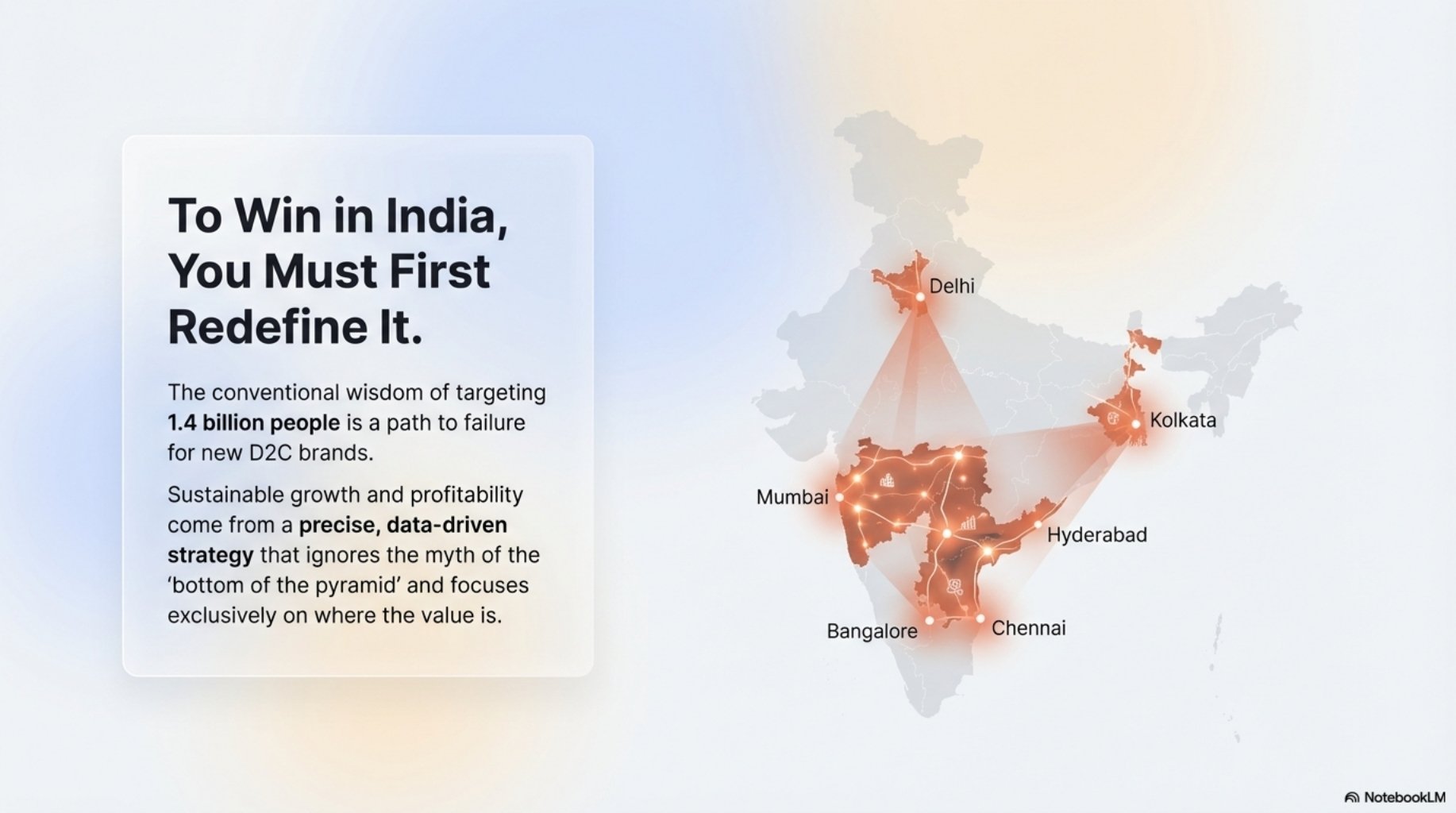
Stop Chasing “All of India”
Winning isn’t about targeting 1.4B people—it’s about redefining the market to where real value and repeat purchases already concentrate.
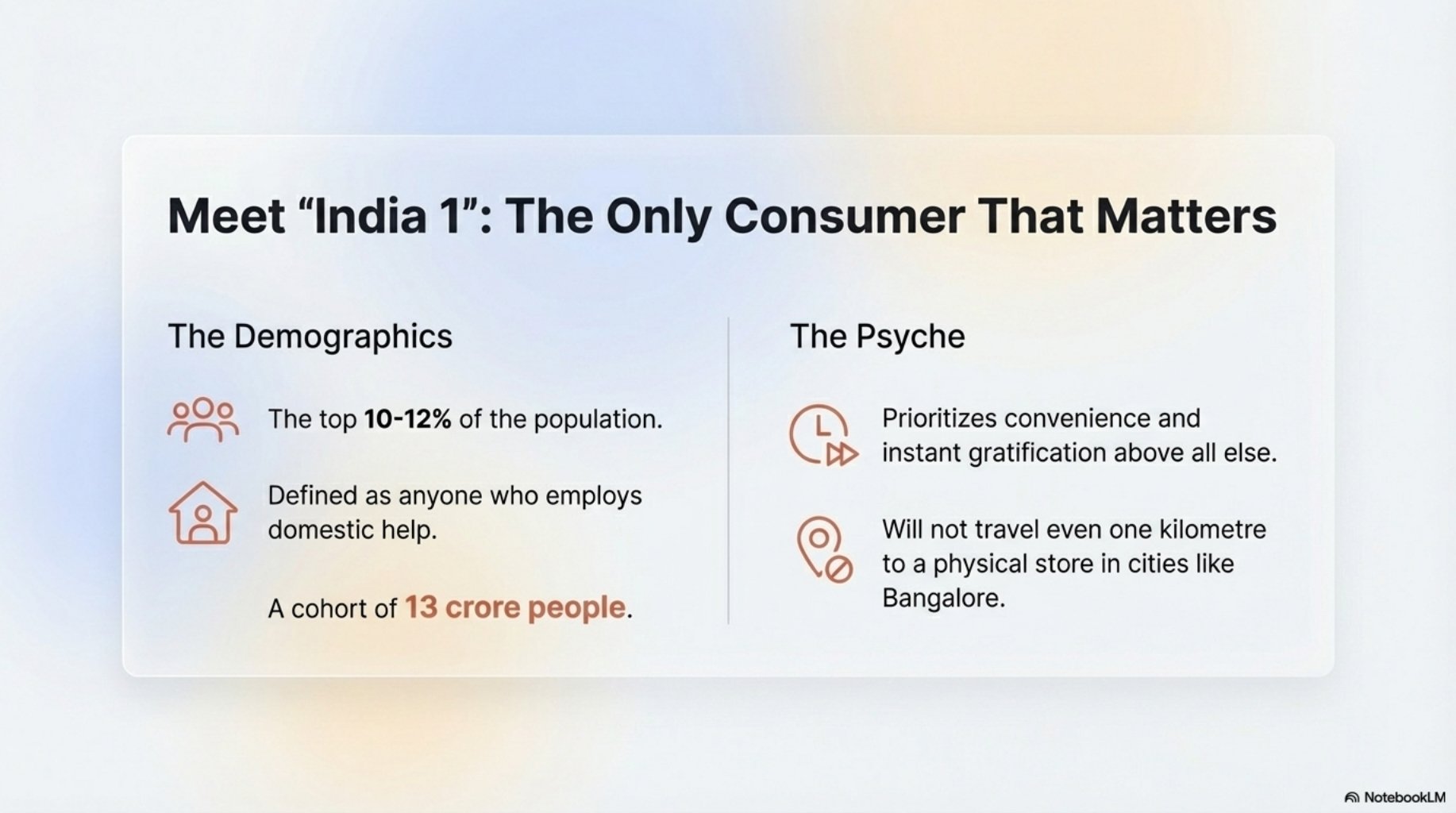
Meet “India 1”: The Only Segment That Moves the Needle
Define the highest-value cohort (top ~10–12%) and their mindset: convenience-first, instant gratification, and low willingness to travel for shopping.
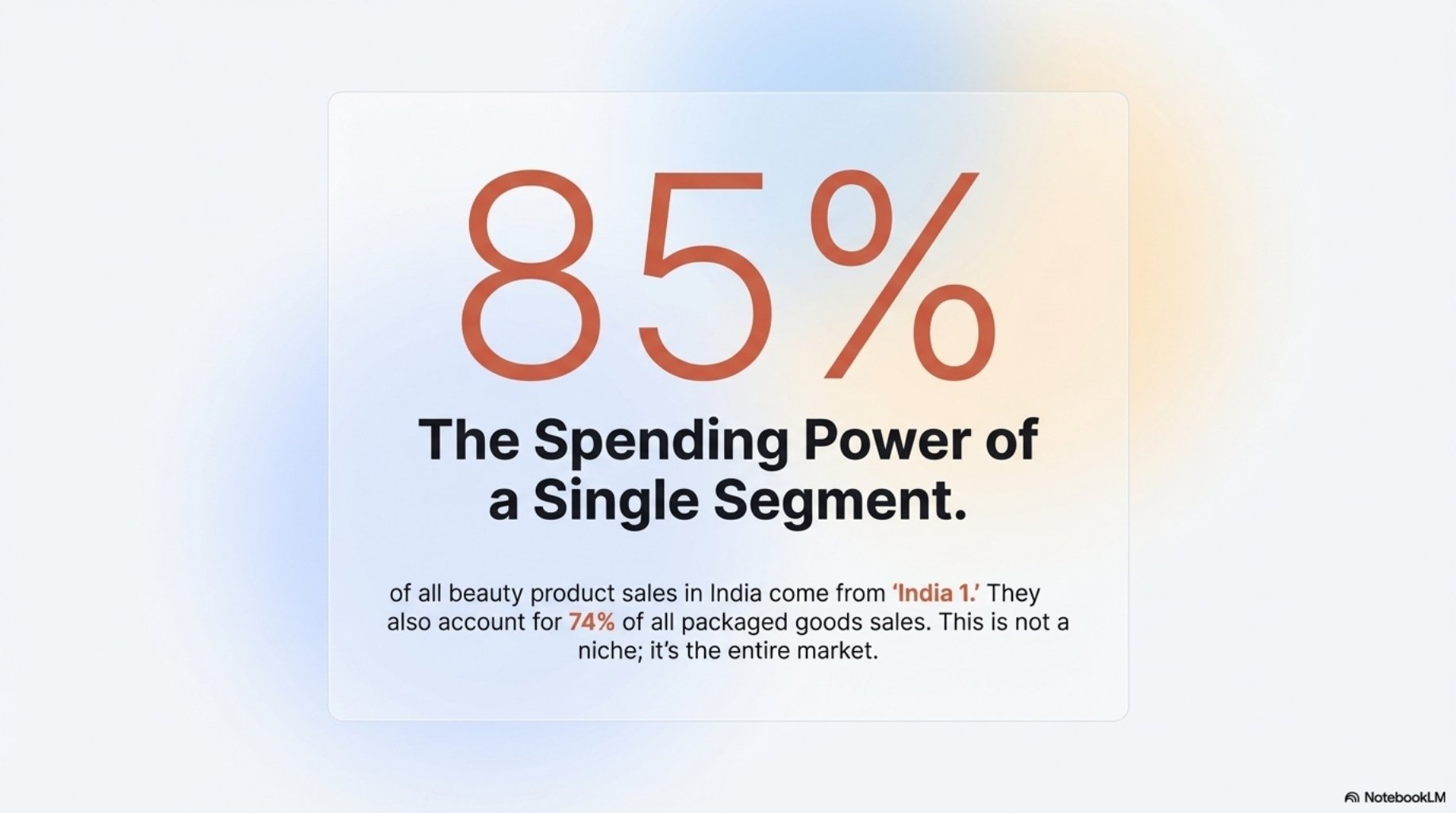
One Segment. Massive Control.
A single consumer segment can dominate category sales—treat this as “the market,” not a niche, and design everything around it.
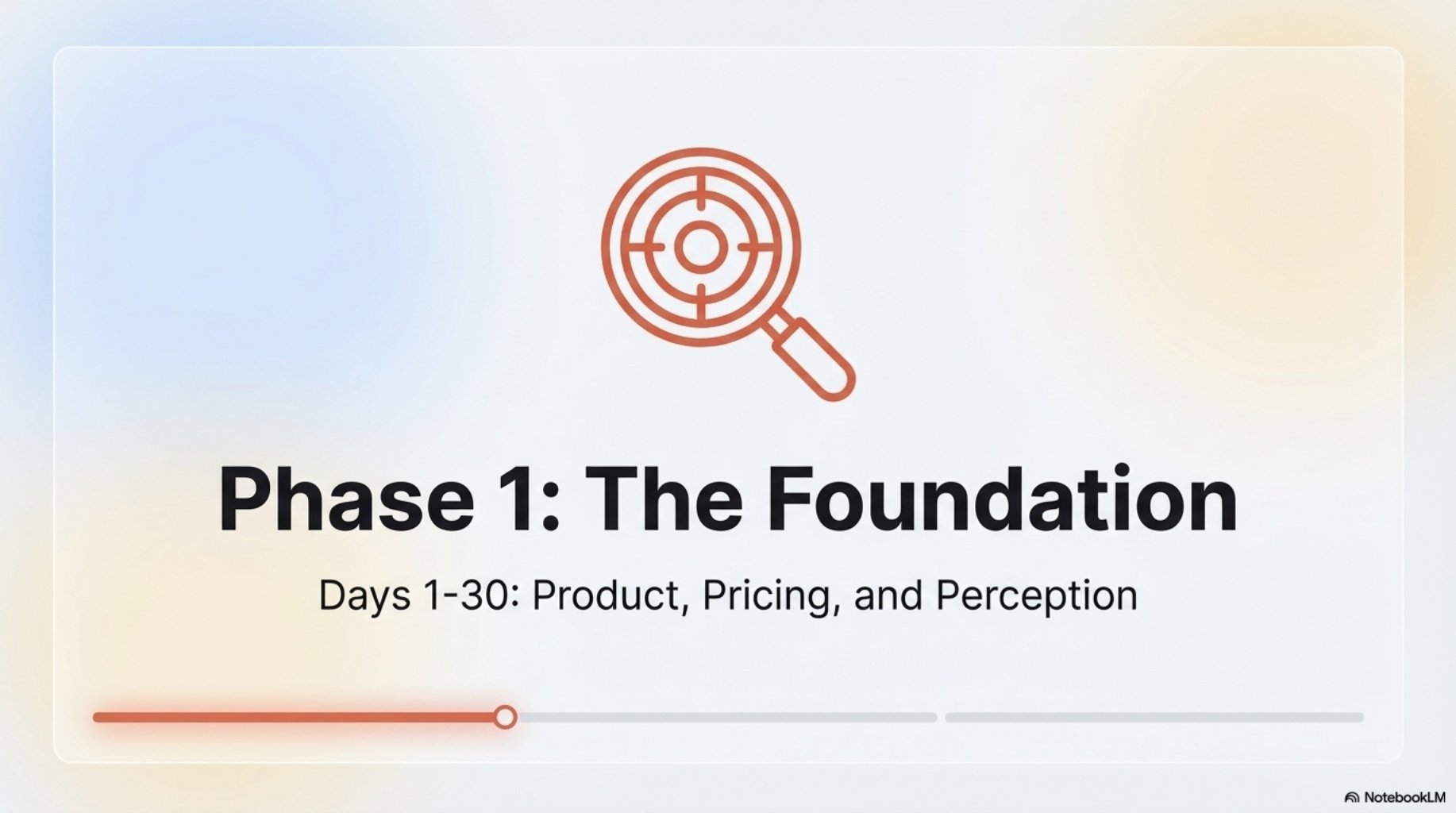
Phase 1: Build the Base
Days 1–30 are about product, pricing, and perception—getting your “why buy” and “why now” strong before scaling distribution.
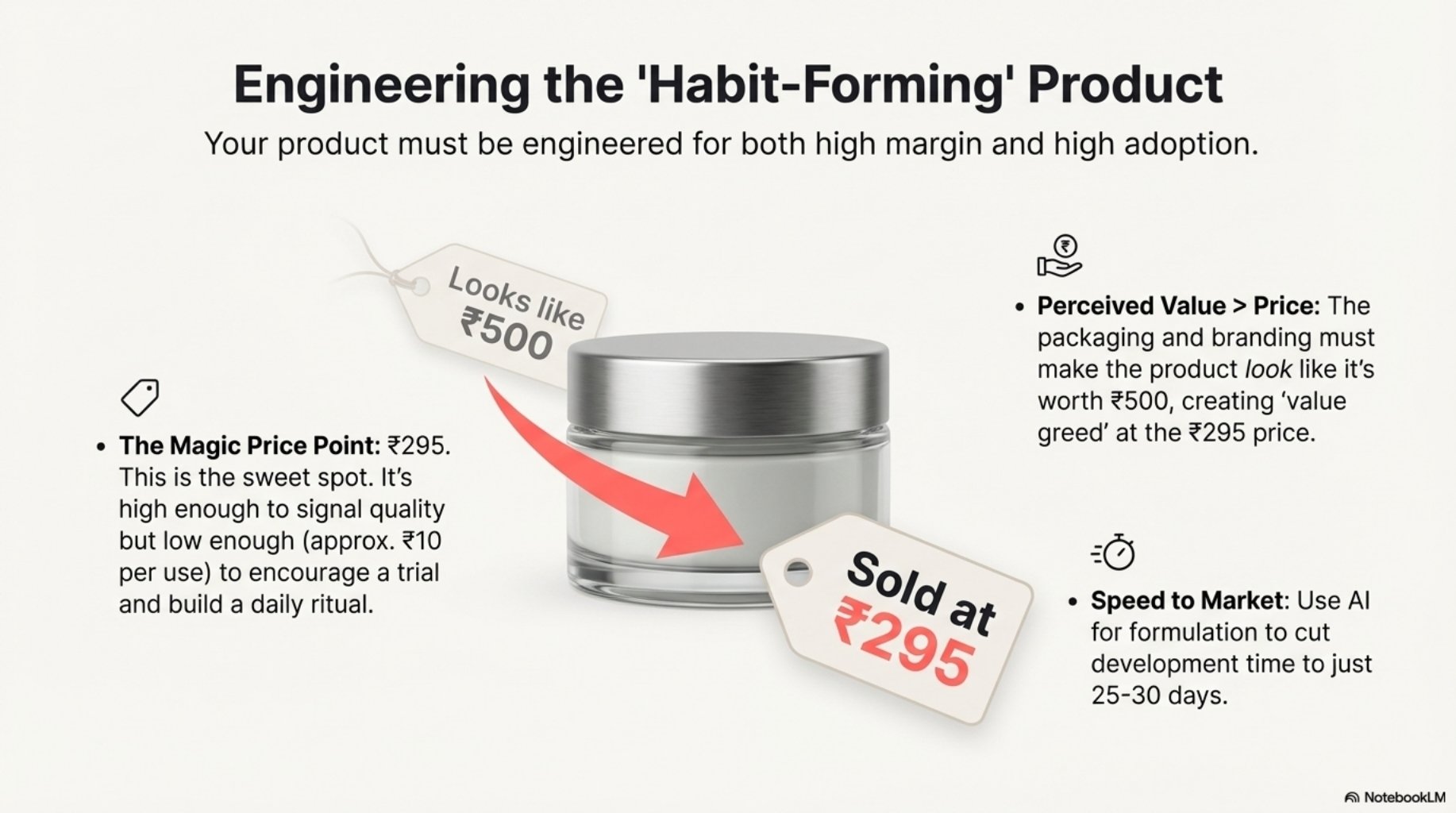
Engineer a Habit, Not Just a Product
Design for high adoption + high margin: a clear price anchor, premium perception via packaging, and a fast path to market.
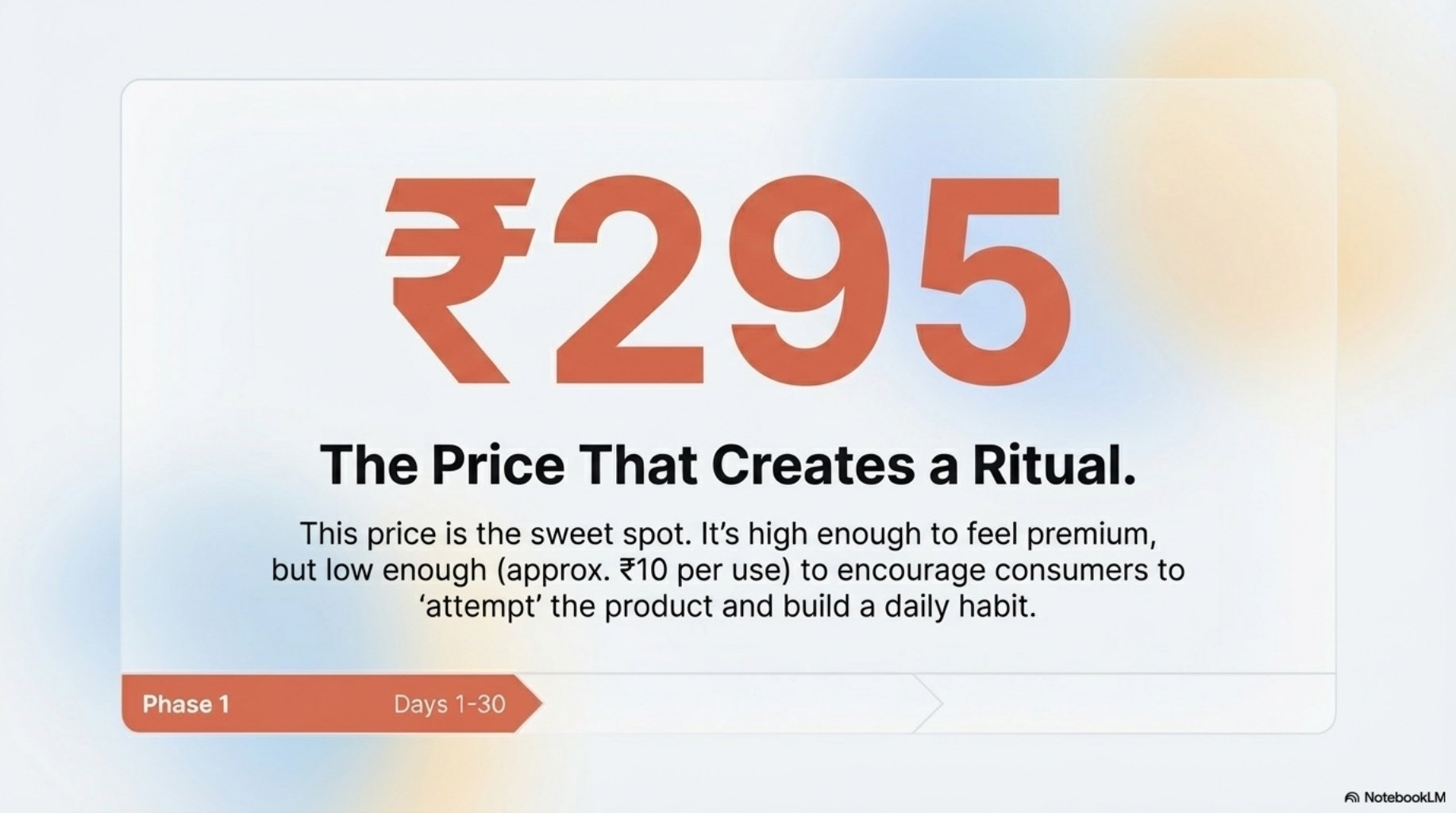
₹295: The Habit Price
The sweet spot that feels premium yet easy to try—low friction for first purchase and repeat usage that forms a daily ritual.
Phase 2: Launch Where India 1 Actually Shops
Days 31–100: dominate discovery on quick commerce—this is your fastest engine for trials and early penetration.
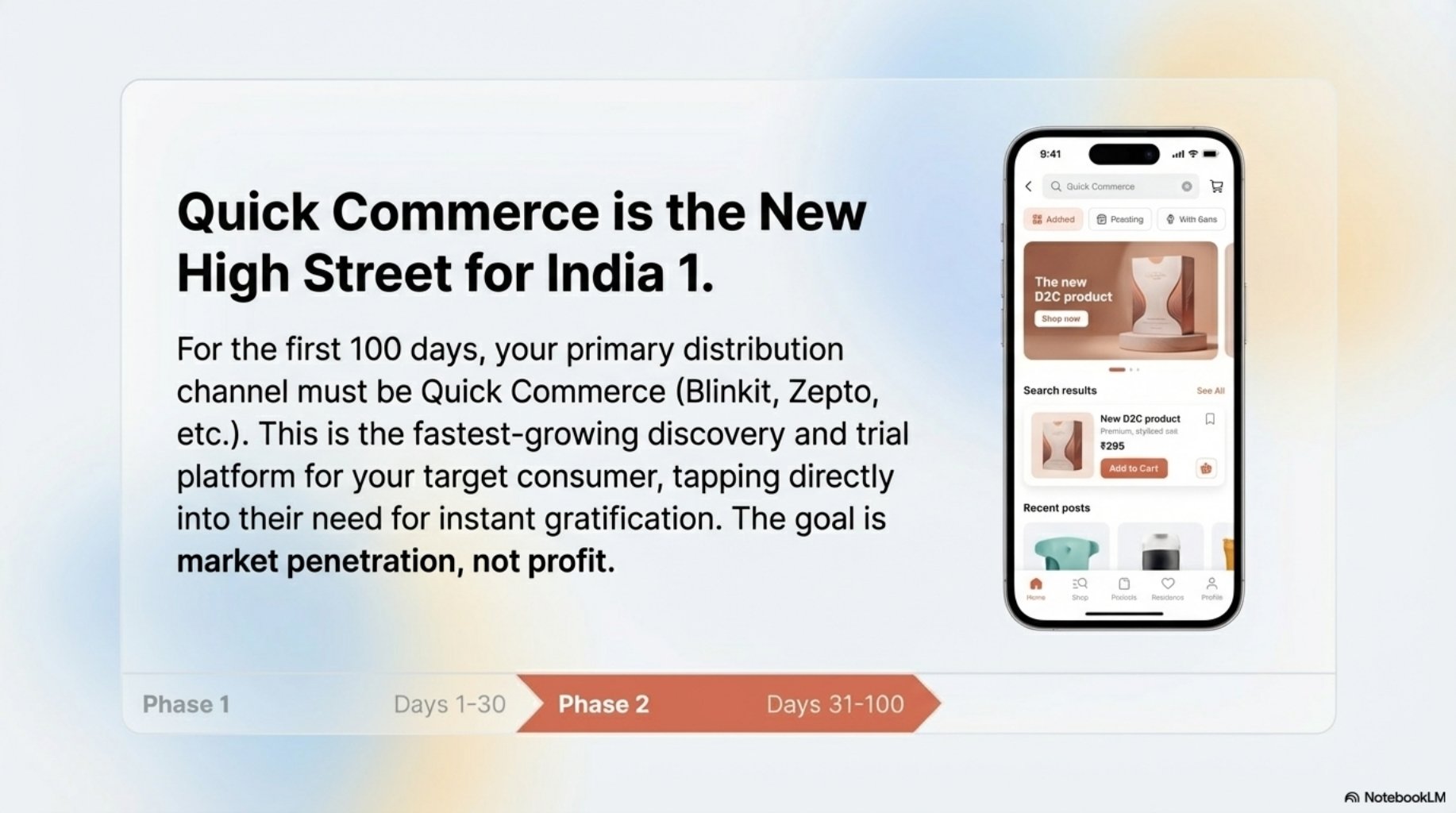
Quick Commerce = The New High Street
Use QC platforms (Blinkit/Zepto, etc.) as your primary launch channel to win visibility and sampling speed—optimize for reach first.
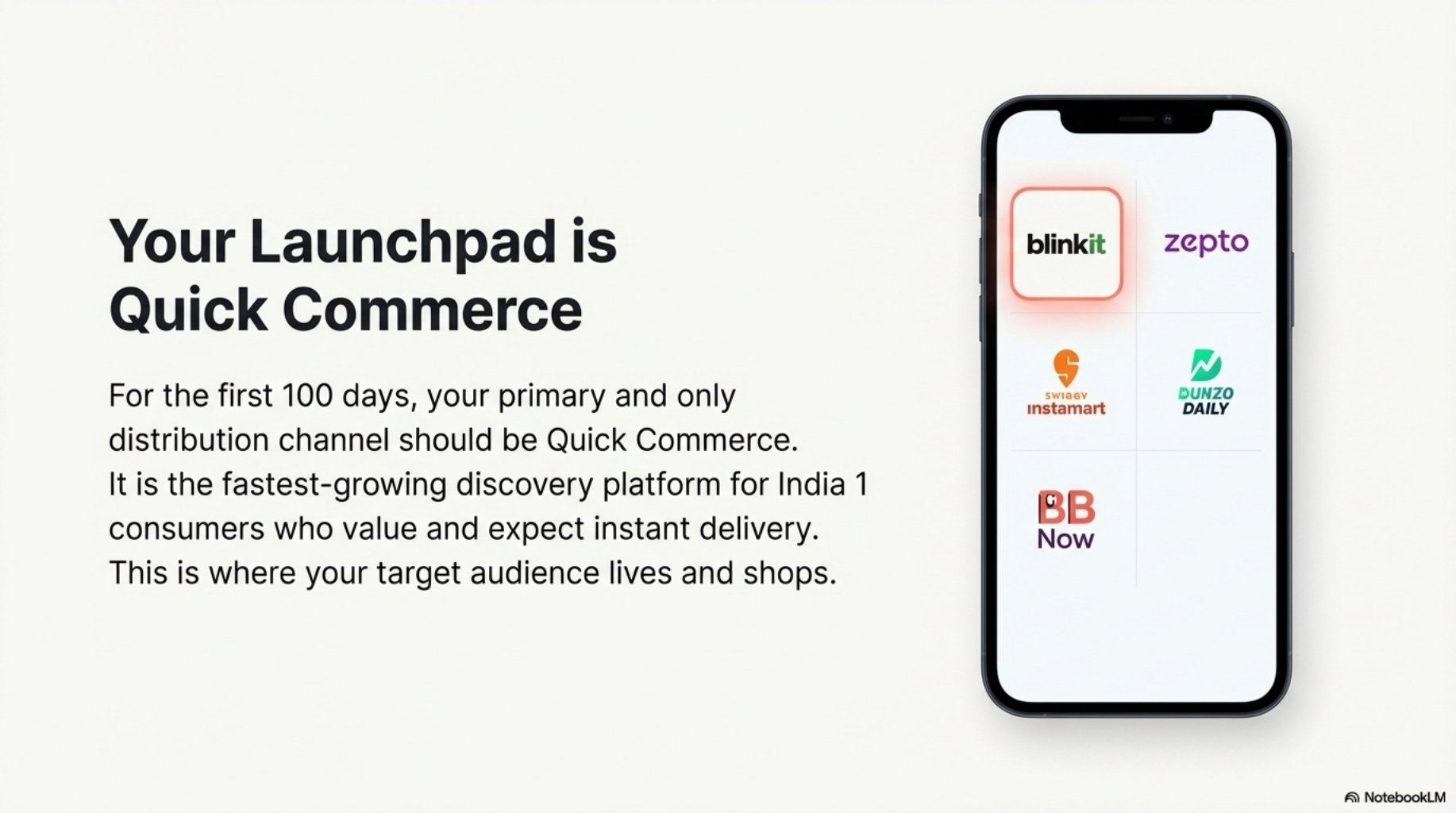
One Channel. One Focus. One Hundred Days.
Make quick commerce your only priority initially—because that’s where your target audience is already trained to discover and buy.
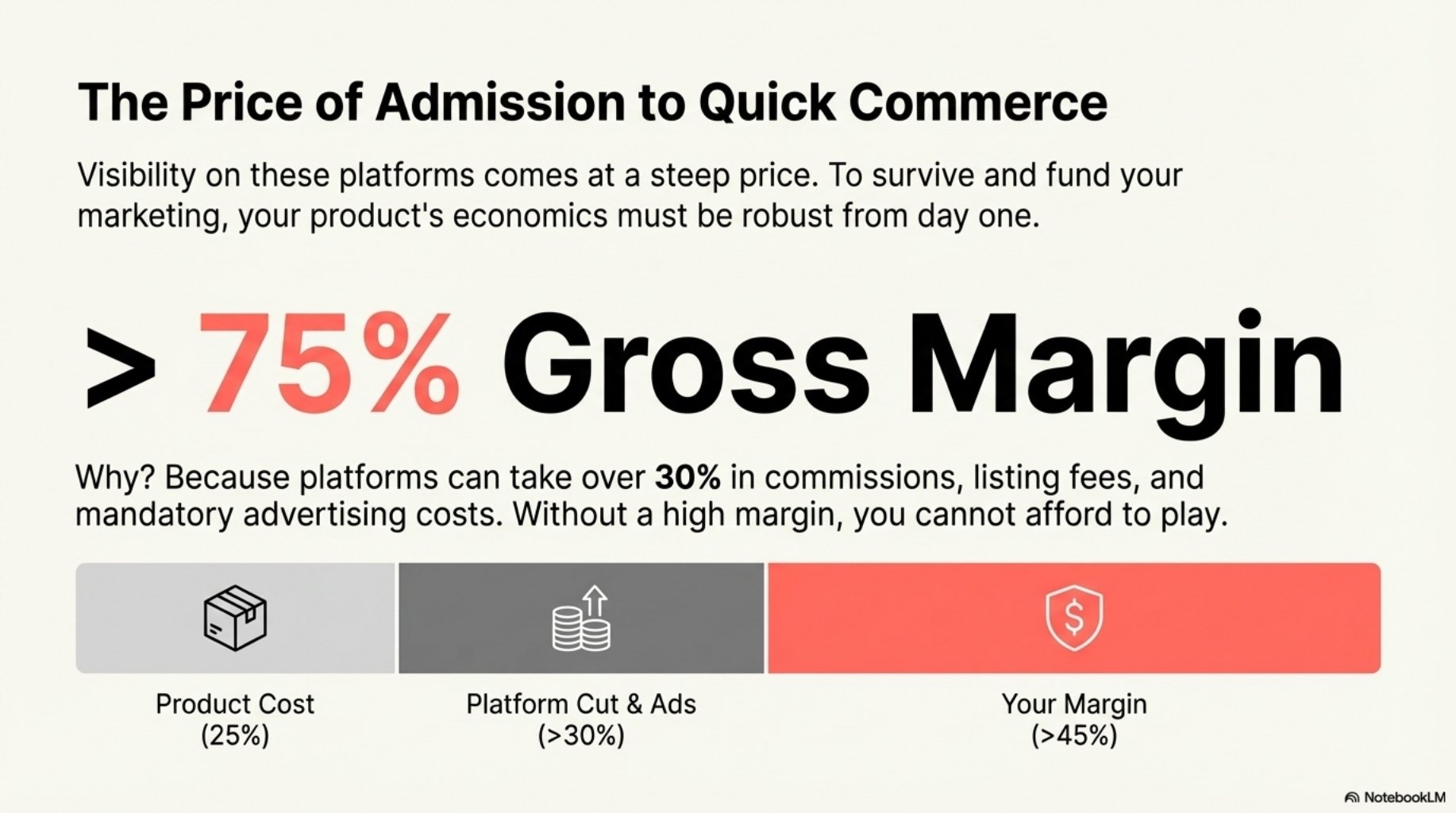
The Entry Fee: >75% Gross Margin
QC visibility is expensive (commissions + listing + ads). Without strong margins, you can’t sustain discovery or scale profitably.
Phase 3: Build Your Fortress
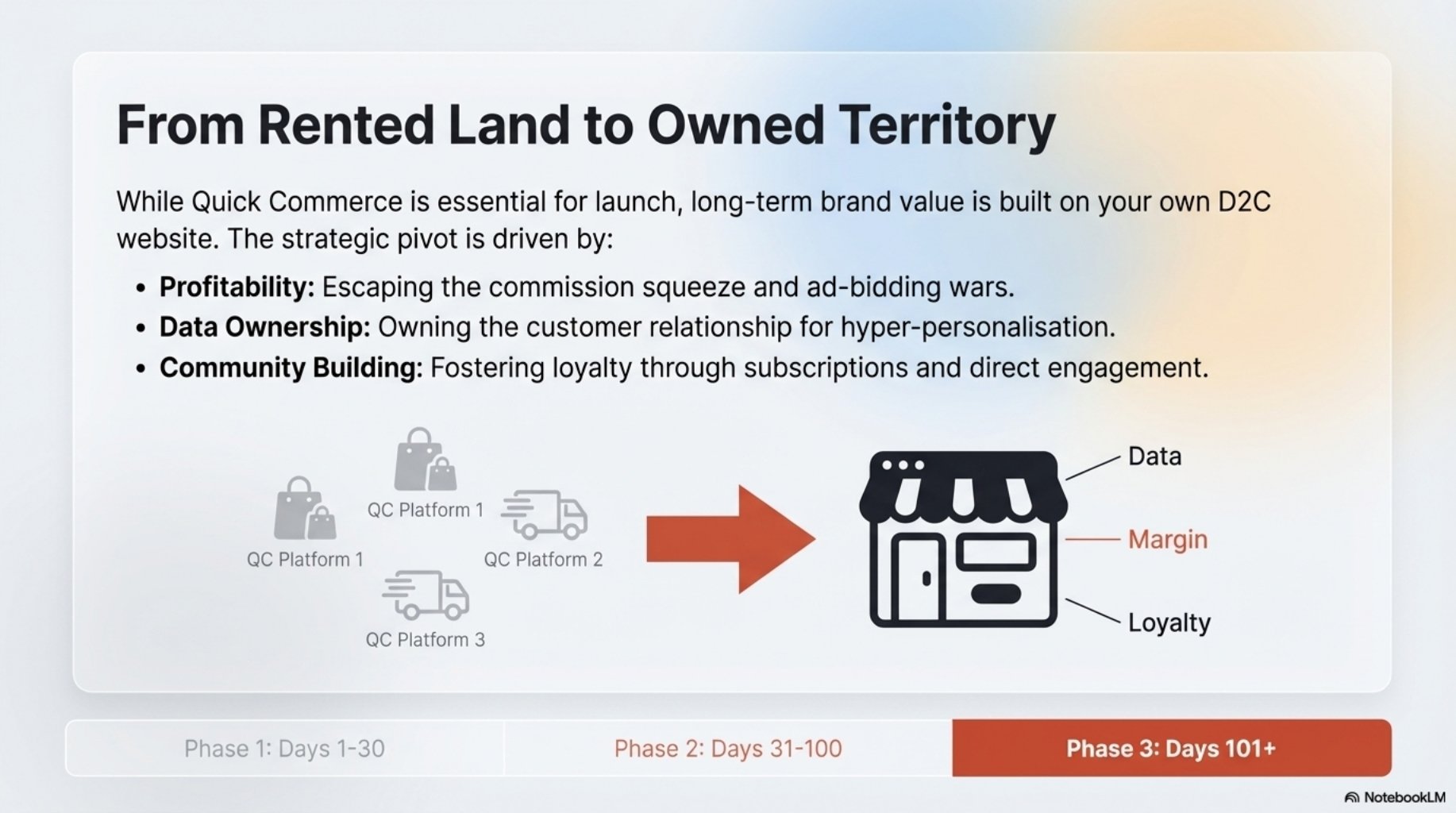
Day 101+: shift from rented platforms to your owned D2C engine—where margin, data, and loyalty compound over time.

From Rented Land to Owned Territory
QC helps you launch, but brand value is created on your own channel through profitability, customer data ownership, and community.
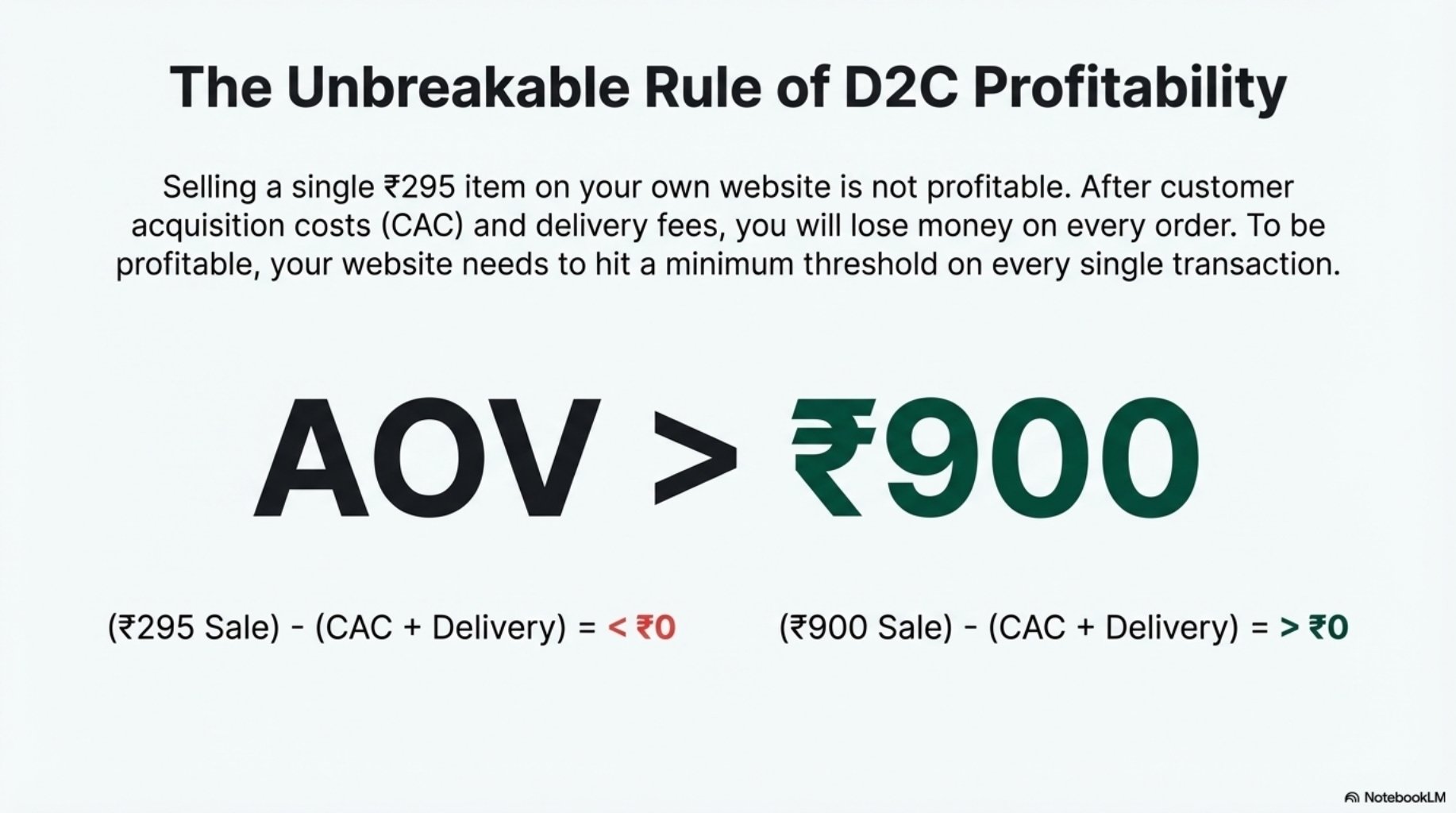
The Unbreakable Profit Rule: AOV > ₹900
A single low-ticket item won’t survive CAC + delivery; profitability requires a minimum transaction threshold per order.
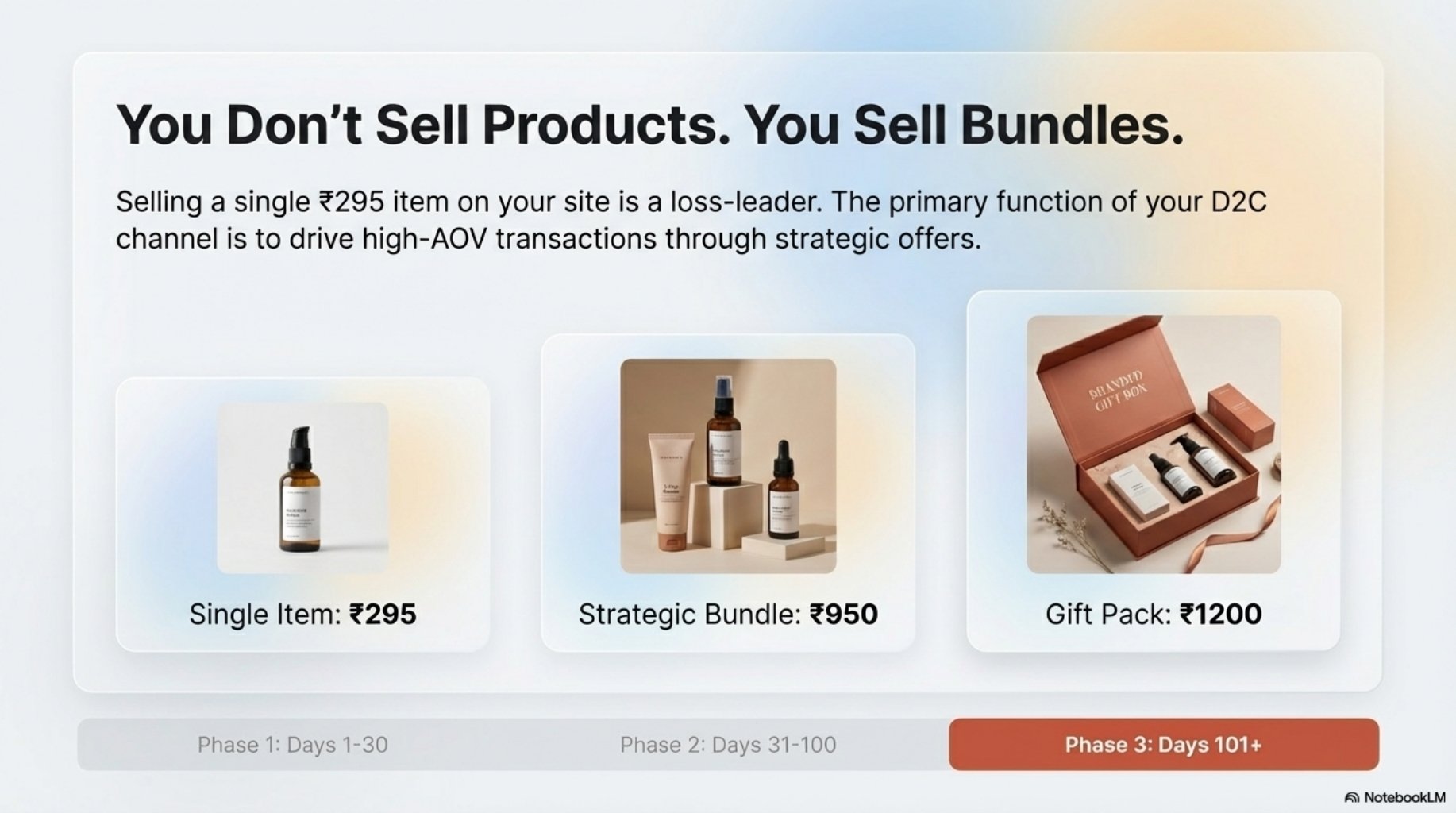
You Don’t Sell Products. You Sell Bundles.
Turn your D2C site into a high-AOV machine with bundles and gift packs—single items become entry points, not the business model.
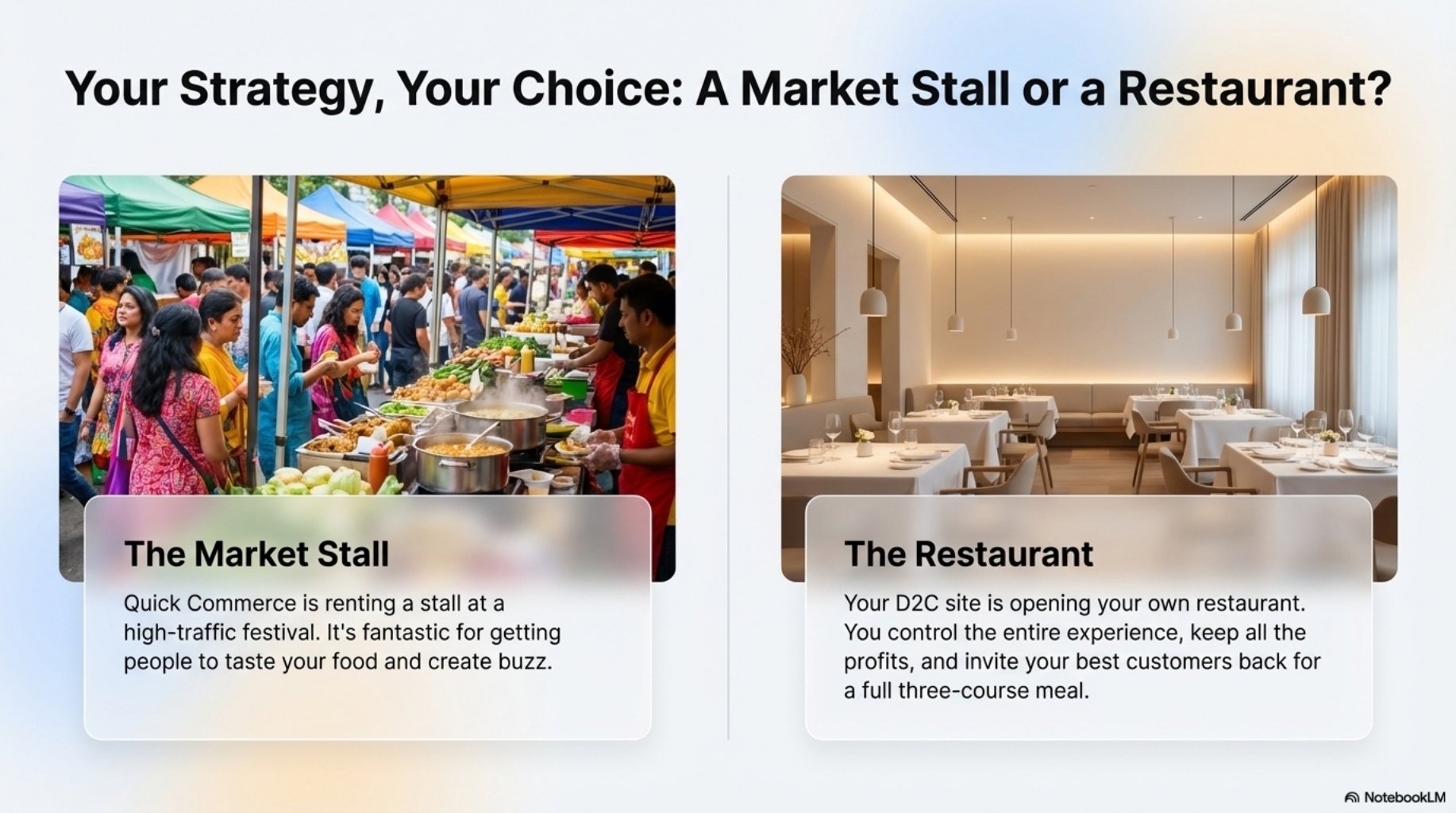
Market Stall vs Restaurant: Choose the Game
Quick commerce is the crowded stall that drives trials fast; your D2C is the restaurant where you control experience, margins, and repeat loyalty.