
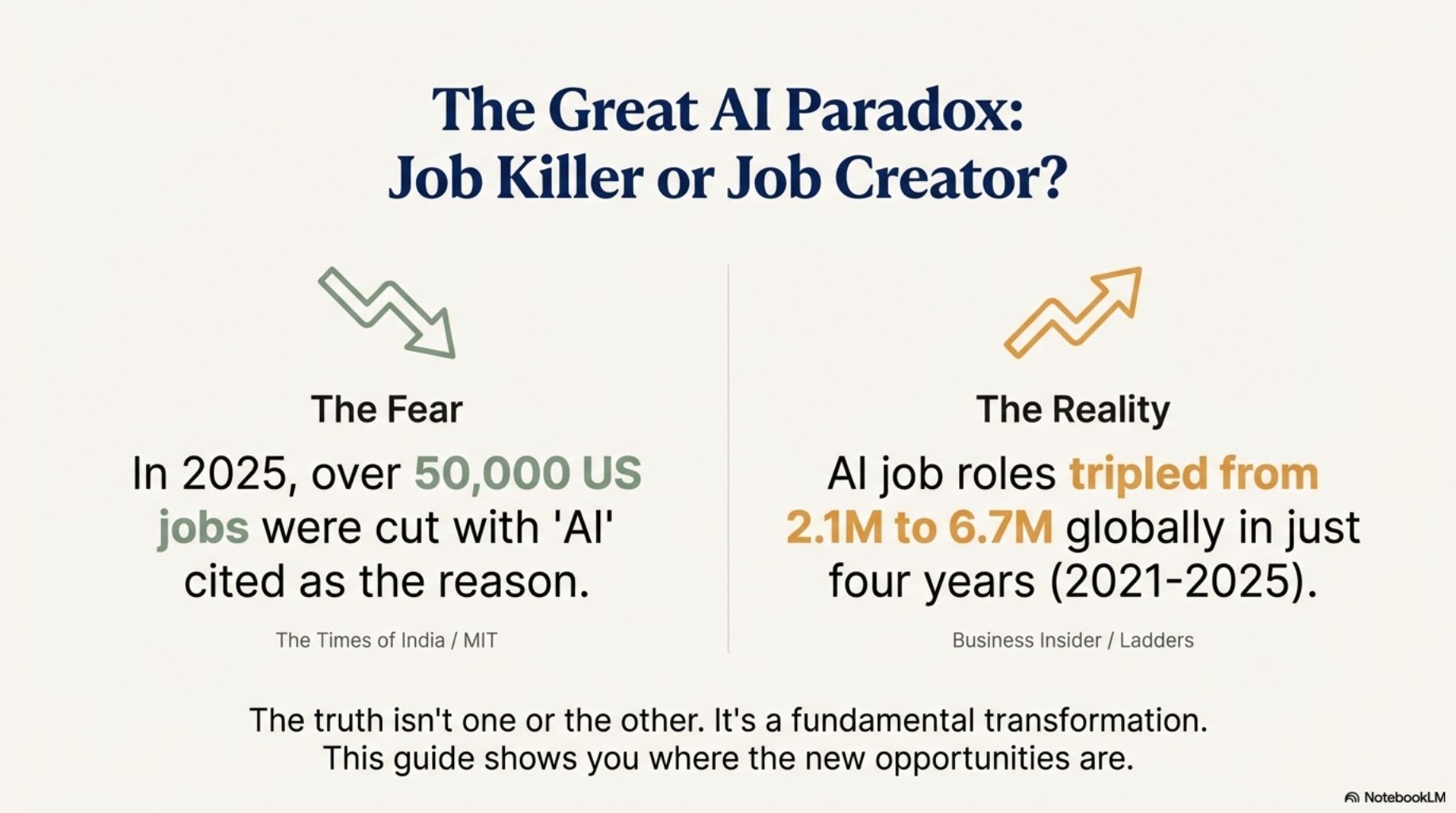
The Great AI Paradox: Job Killer or Job Creator?
AI jobs are no longer a niche category reserved for tech giants. The global market is moving toward millions of AI-linked roles, spanning engineering, operations, governance, and leadership. This isn’t a short-term hiring spike—it’s a structural shift similar to what software engineering experienced in the early 2000s, but faster and broader.
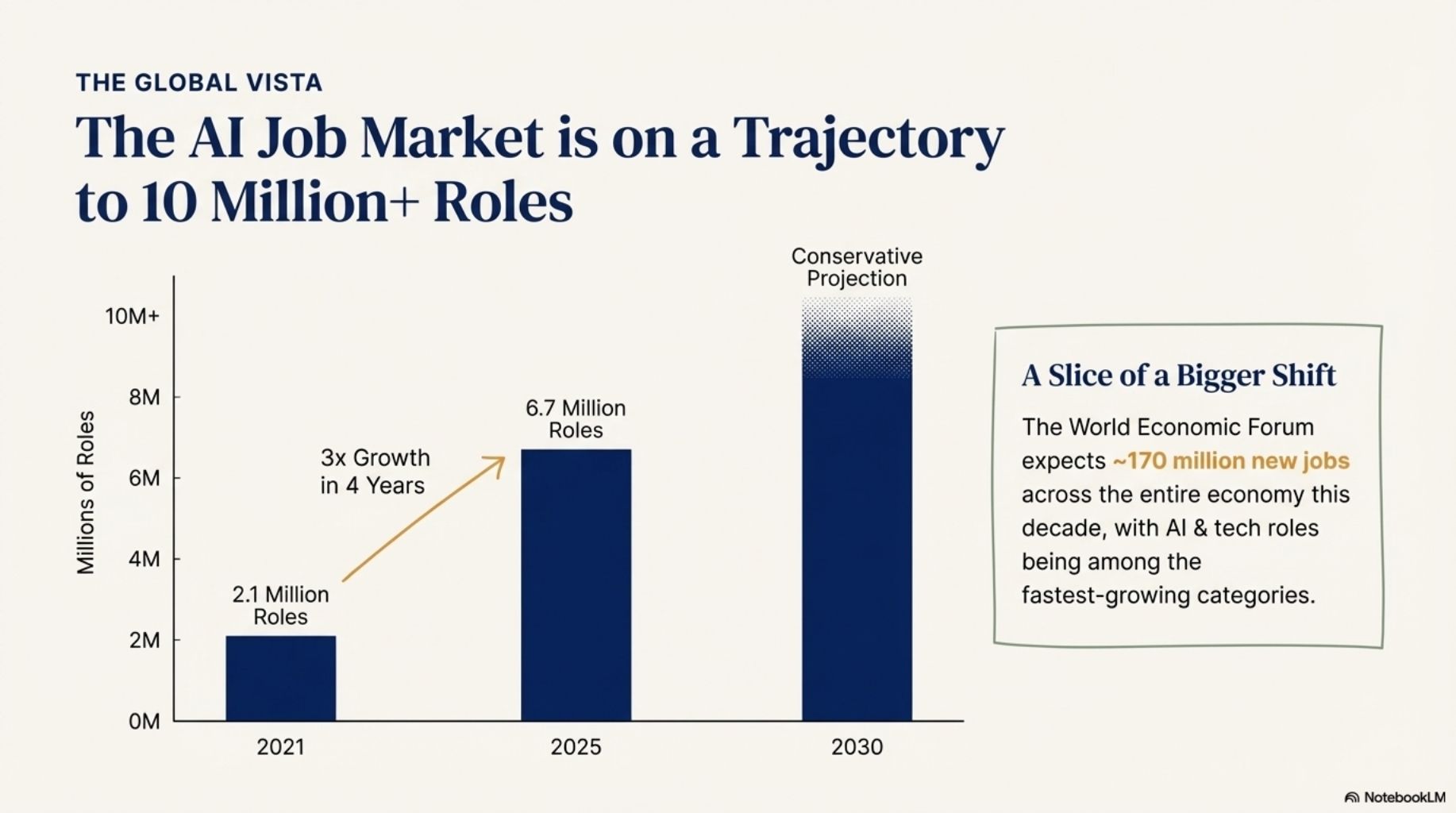
The Global Vista: 10 Million+ Roles Incoming
AI jobs are no longer a niche category reserved for tech giants. The global market is moving toward millions of AI-linked roles, spanning engineering, operations, governance, and leadership. This isn’t a short-term hiring spike—it’s a structural shift similar to what software engineering experienced in the early 2000s, but faster and broader.
India’s Strategic Advantage—and Its Bottleneck
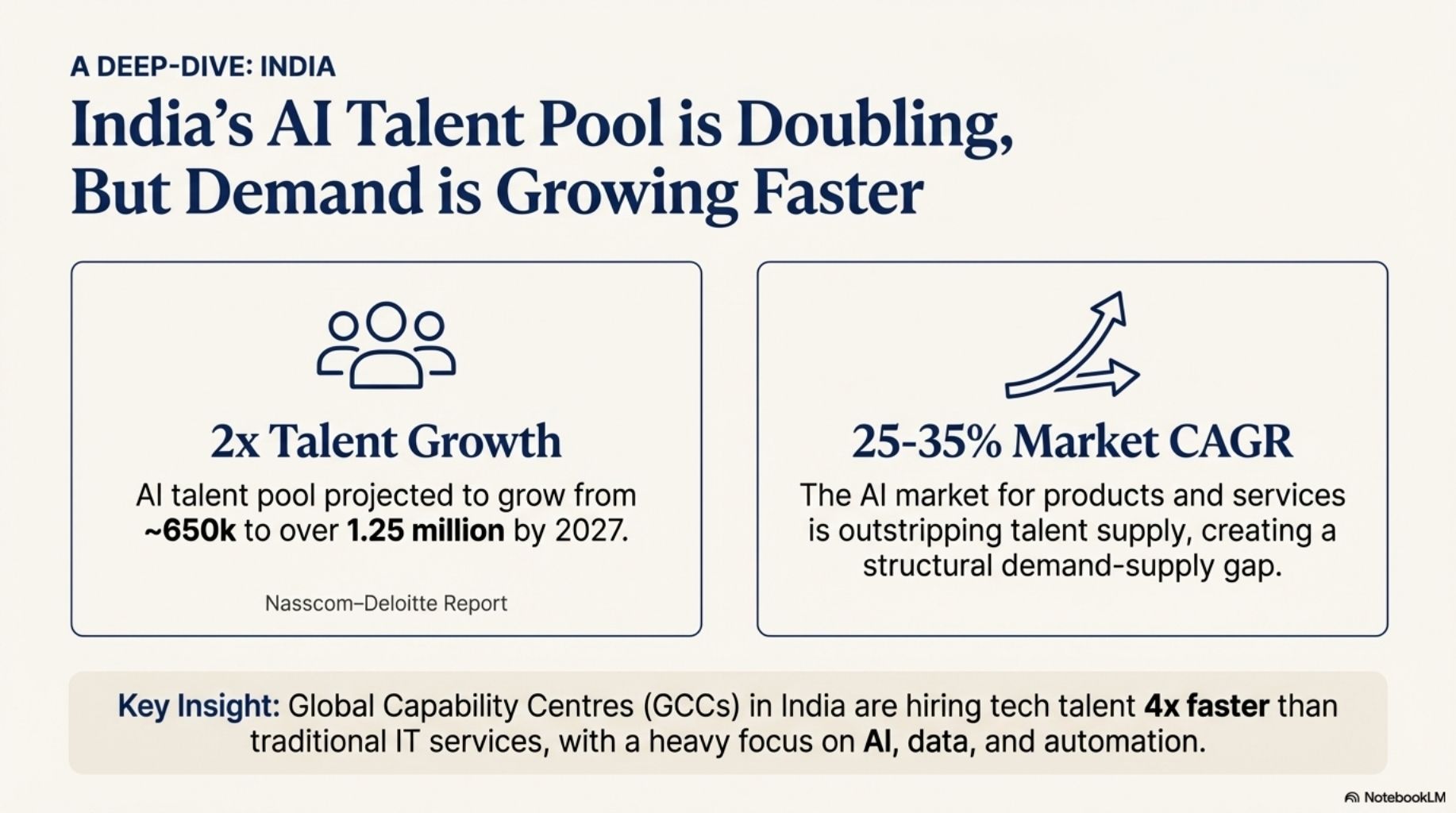
India’s AI talent pool is expected to expand from about 650,000 professionals to over 1.25 million by 2027. Yet demand is outpacing supply, growing at 25–35% CAGR across AI products and services. One critical driver is Global Capability Centers (GCCs), which are hiring AI, data, and automation talent at nearly 4× the pace of traditional IT services. The result: global-grade AI work is increasingly being built from within India.
Why Job Titles No Longer Matter
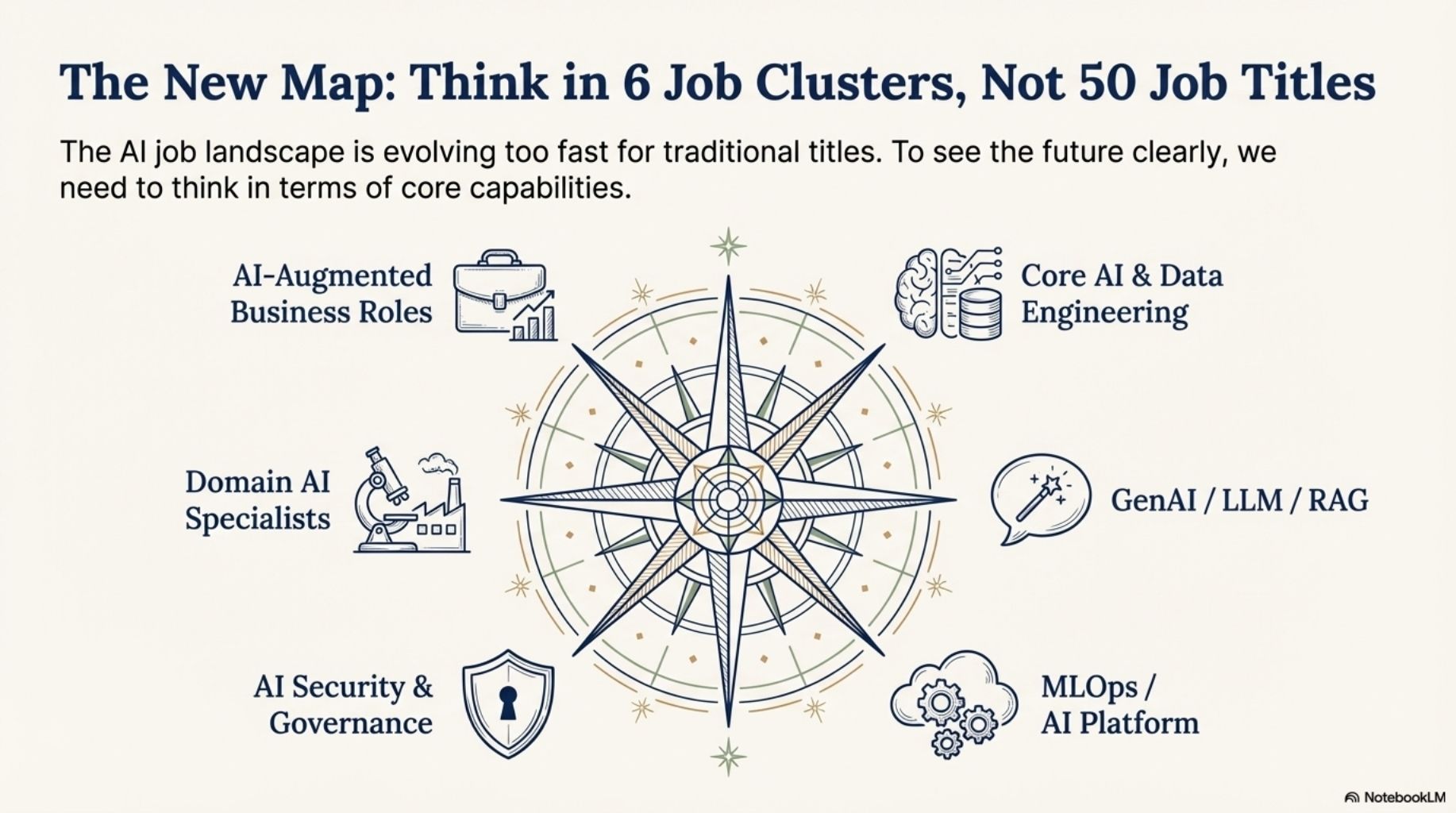
Job titles have become unreliable signals—renamed, rebranded, and fragmented across companies. Capabilities, however, remain stable. When you group the market into six core clusters—AI engineering, GenAI/RAG systems, AI platforms & MLOps, AI security & governance, domain AI specialists, and AI-augmented business roles—the chaos disappears. This lens makes it possible to plan skills and careers even as titles keep changing.
The Engineering Engine of AI Hiring
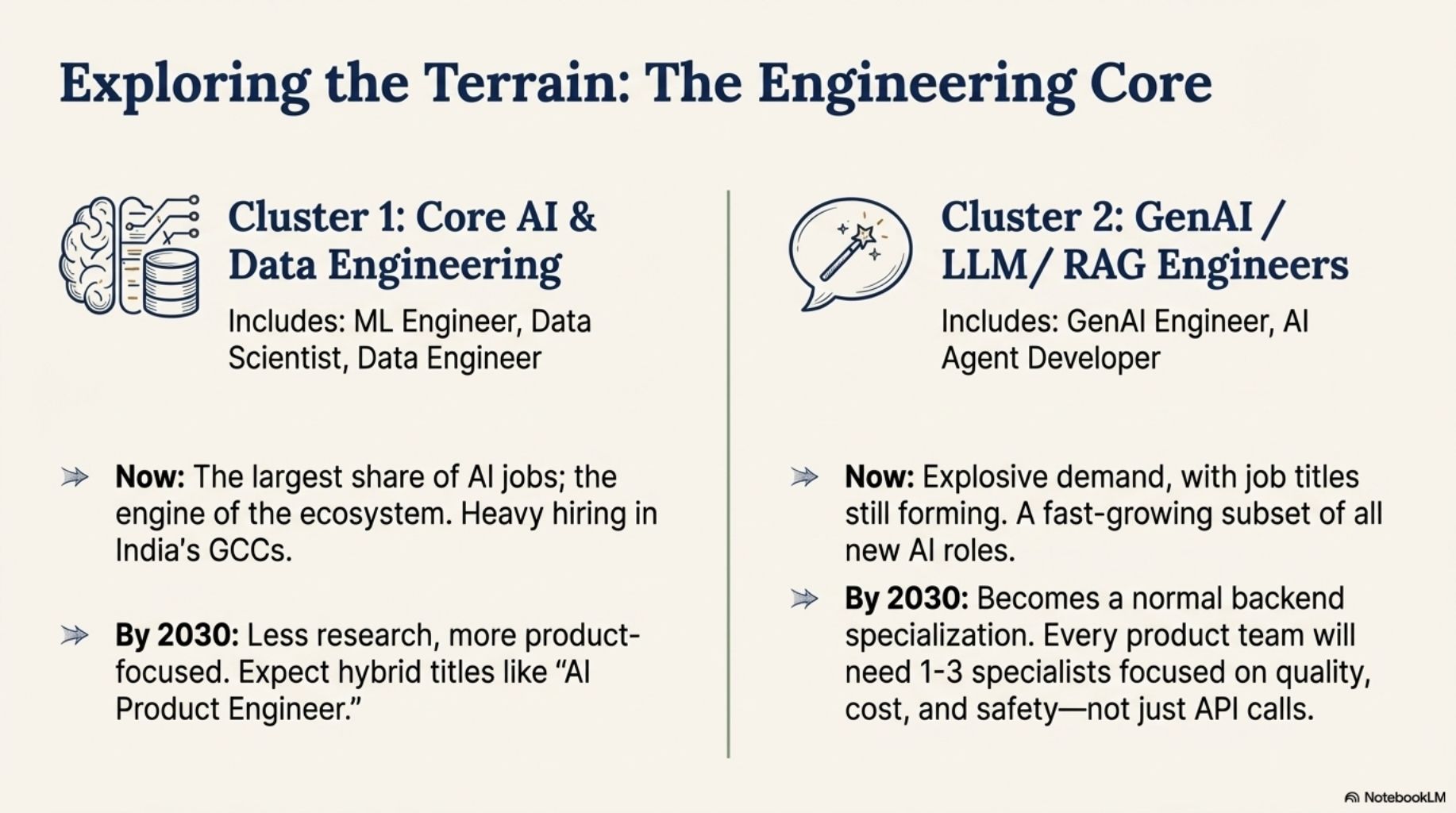
At the center of AI hiring sit traditional AI and data roles—ML engineers, data scientists, and data engineers—still forming the largest share of demand, especially within GCC ecosystems. Alongside them, GenAI and RAG-focused roles are surging, driven by real product deployments. Over time, GenAI will normalize into backend infrastructure, making deep system control—quality, cost, and safety—far more valuable than simple API usage.
The Missing Layer: Infrastructure and Defense
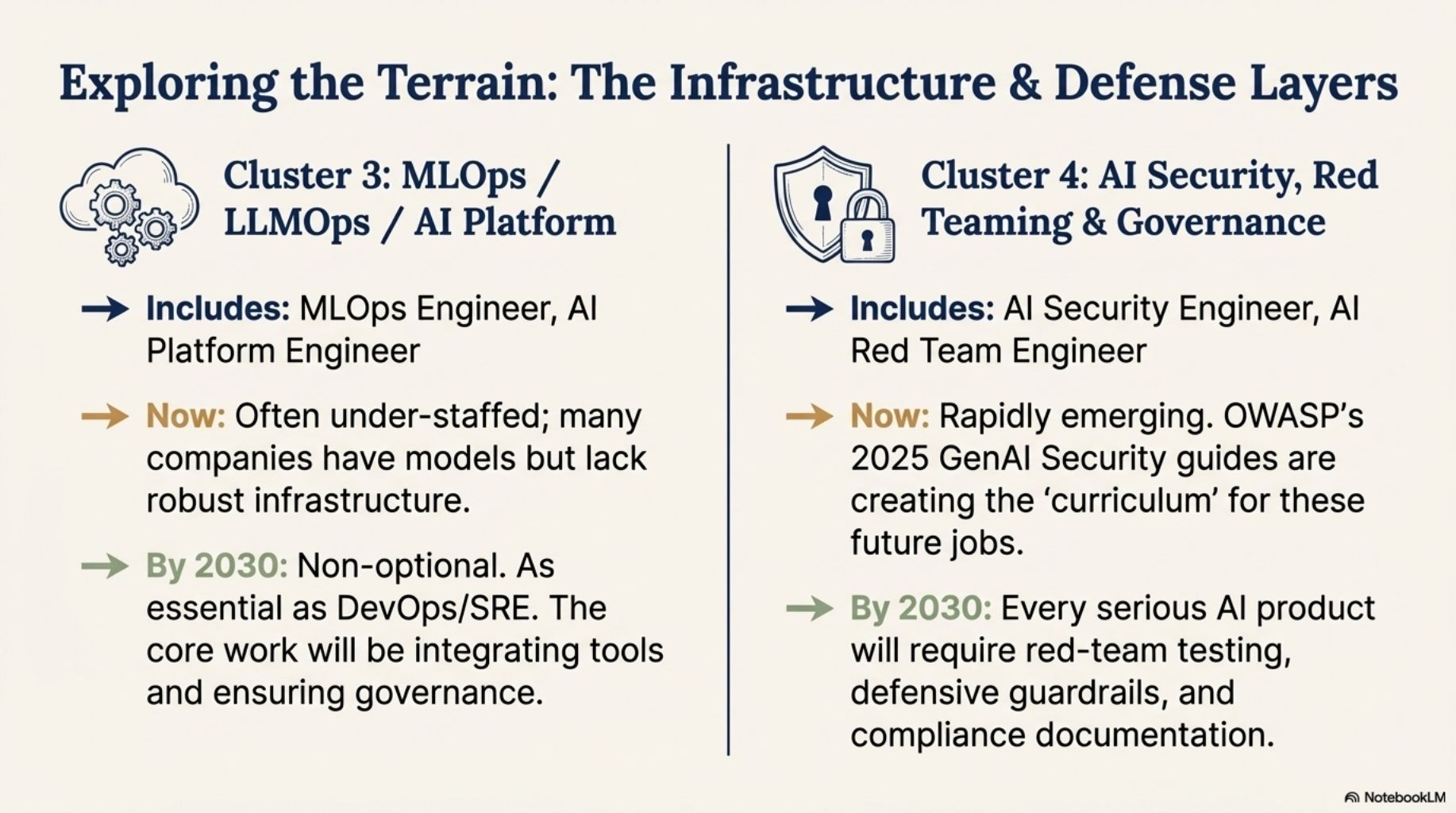
A common reason AI projects stall isn’t model quality—it’s lack of operational readiness. Roles in MLOps, LLMOps, and AI platforms are under-hired today but are on track to become as essential as DevOps and SRE by 2030. In parallel, AI security and governance are shifting from niche concerns to mandatory requirements, with red-teaming, guardrails, and compliance becoming standard for serious AI products.
Where AI Quietly Creates Real Business Value
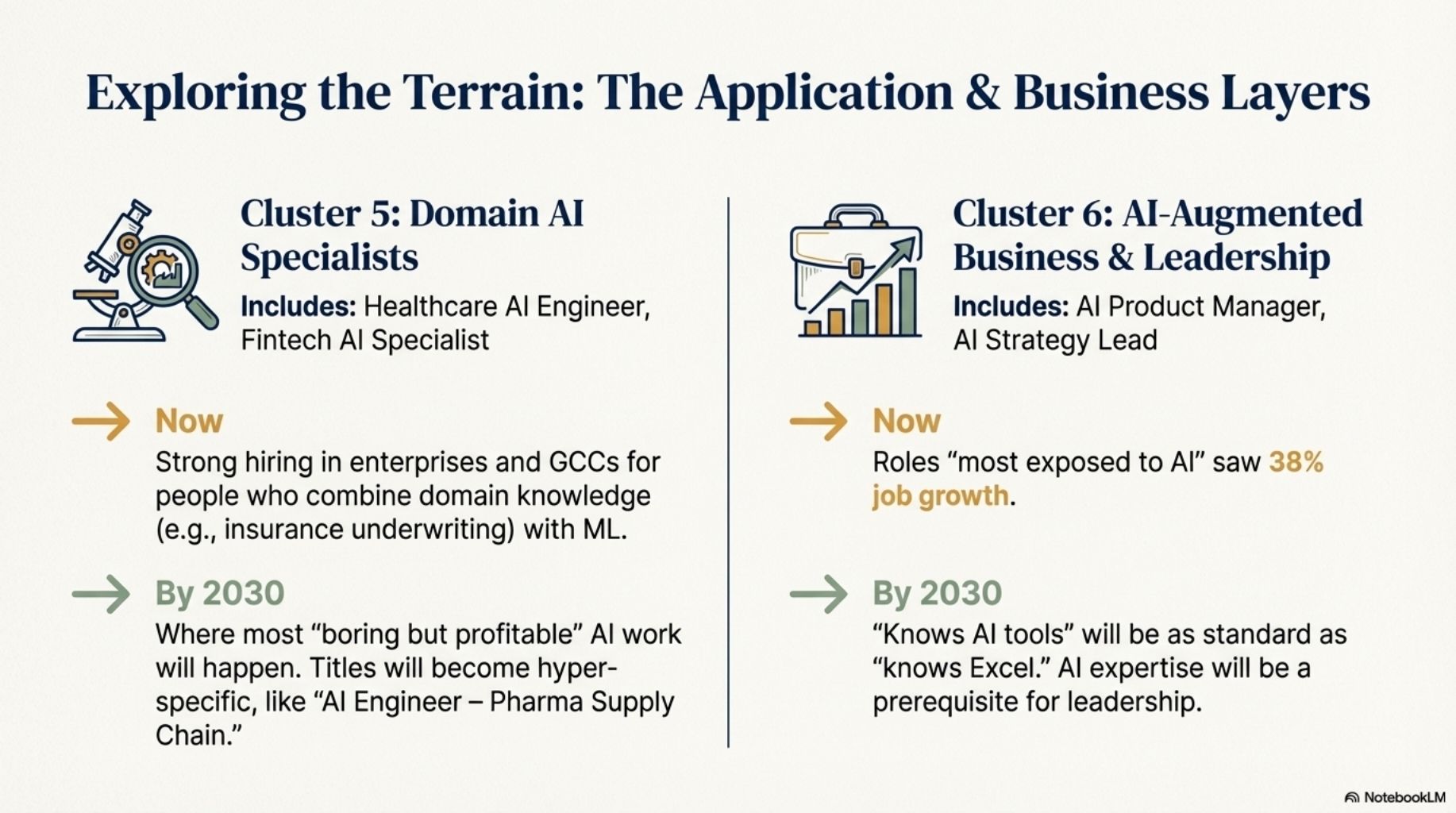
The most durable AI careers may not look exciting on social media. Domain AI specialists—who combine industry expertise with machine learning—are building systems that directly impact revenue, risk, and efficiency in healthcare, finance, insurance, and supply chains. Meanwhile, business and leadership roles are being redefined: by 2030, AI literacy will be as fundamental as spreadsheet skills are today.
What the Data Actually Shows
Beyond opinions and headlines, the data reveals patterns that most discussions miss. When examined closely, AI’s impact on jobs is neither random nor catastrophic—it follows clear rules. Three discoveries, in particular, explain where opportunity is concentrating and why panic is misplaced.
Discovery #1: AI Exposure Correlates with Job Growth
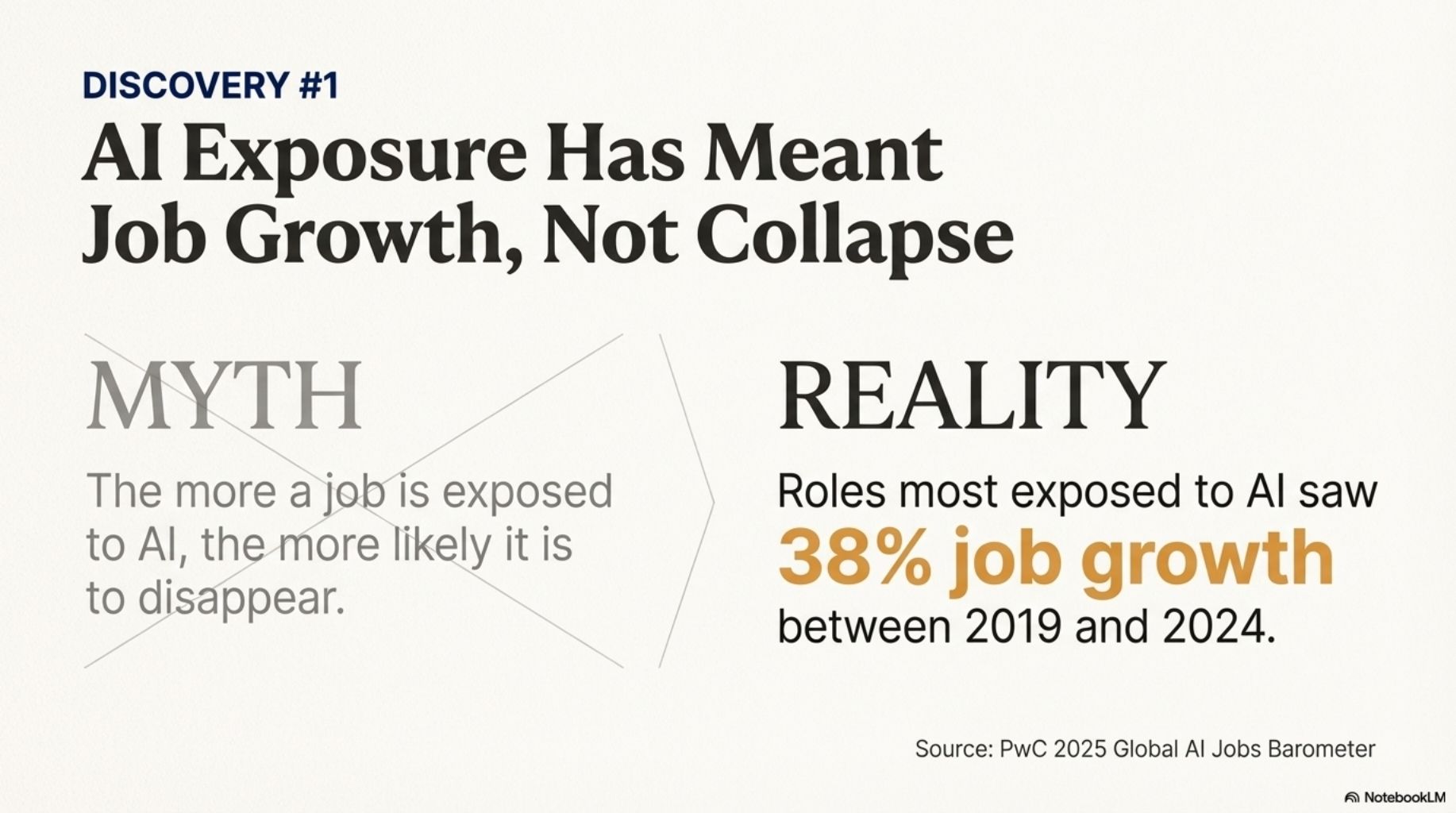
Roles with the highest exposure to AI did not shrink—they grew by roughly 38% between 2019 and 2024. AI increases productivity expectations, which often leads to more hiring of people who can operate effectively with AI, not fewer. The work changes, the bar rises, but demand remains strong.
Discovery #2: The Market Is Paying for AI Skills
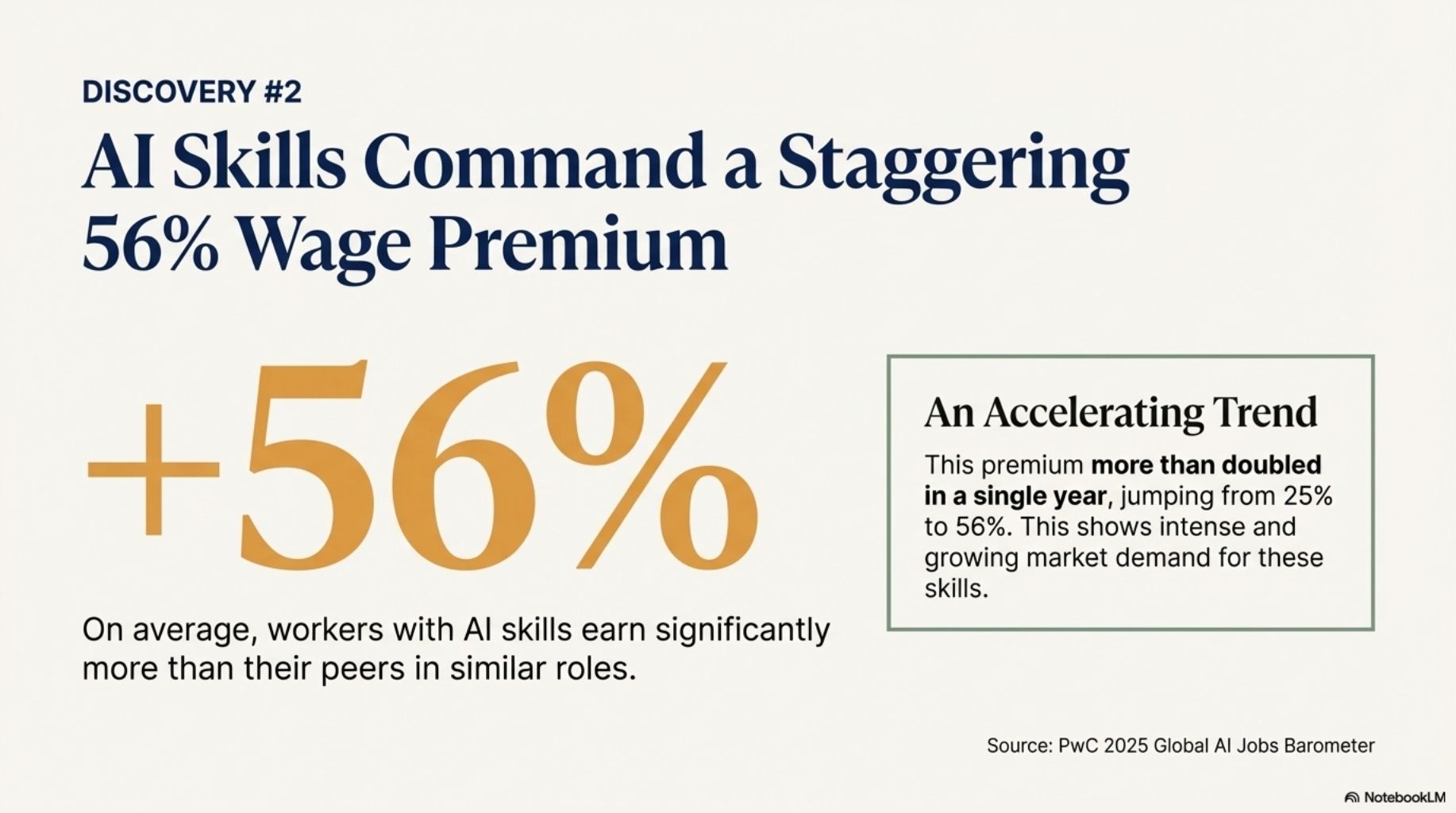
Professionals with AI skills command an average 56% wage premium, up from ~25% just a year earlier. That doubling in premium signals urgency, not saturation. Markets don’t pay premiums like this unless supply is lagging behind demand. AI capability is being priced as leverage, not as a commodity.
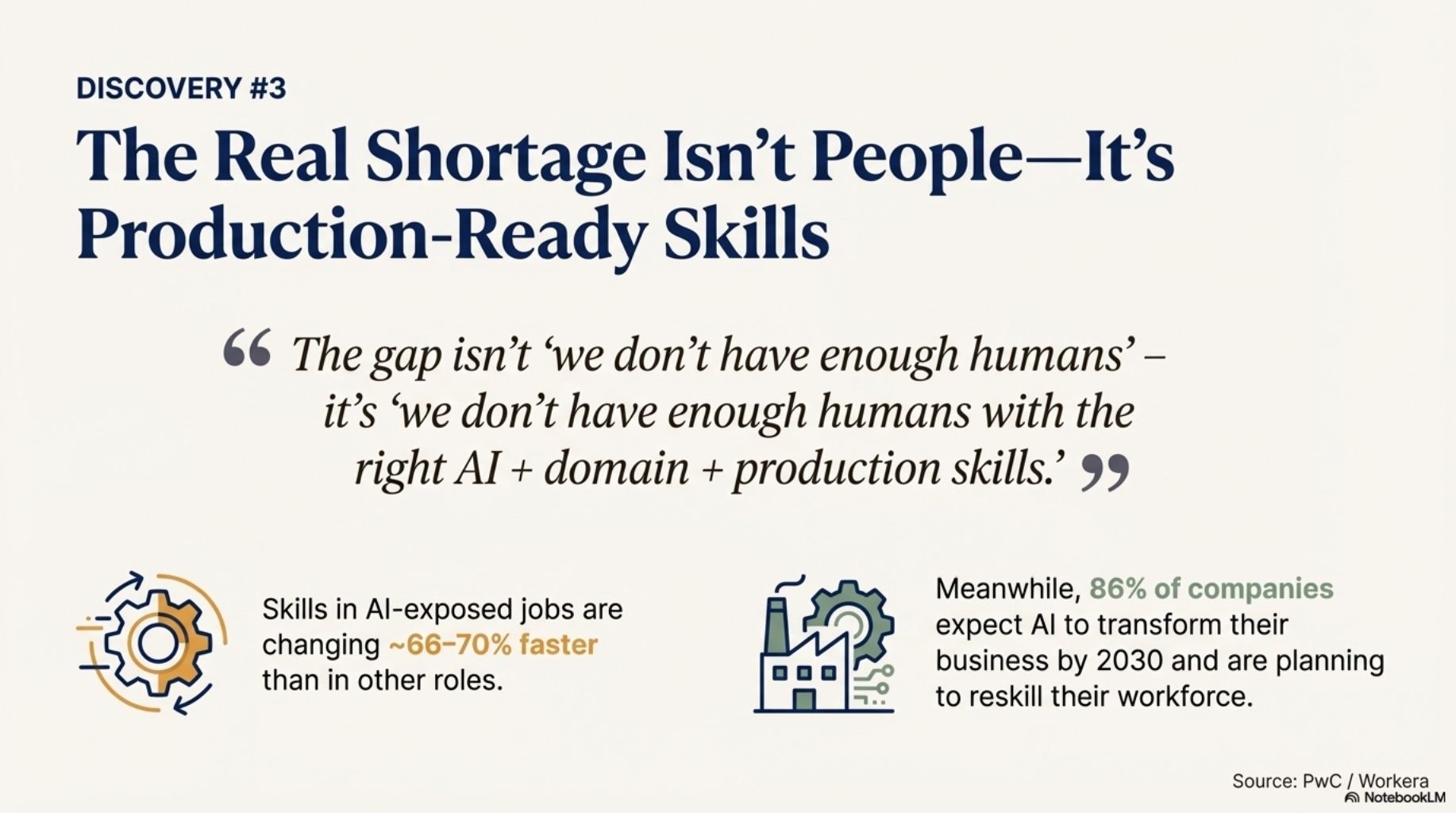
Discovery #3: The Shortage Is Not Talent—It’s Readiness
Skills in AI-exposed roles are evolving 66–70% faster than in other jobs. Meanwhile, 86% of companies expect AI to significantly transform their business by 2030, and most are planning large-scale reskilling. The scarcity lies in people who can ship: those who combine AI knowledge with deployment, monitoring, security, and governance in real environments.
How to Navigate This Shift Without Overwhelm
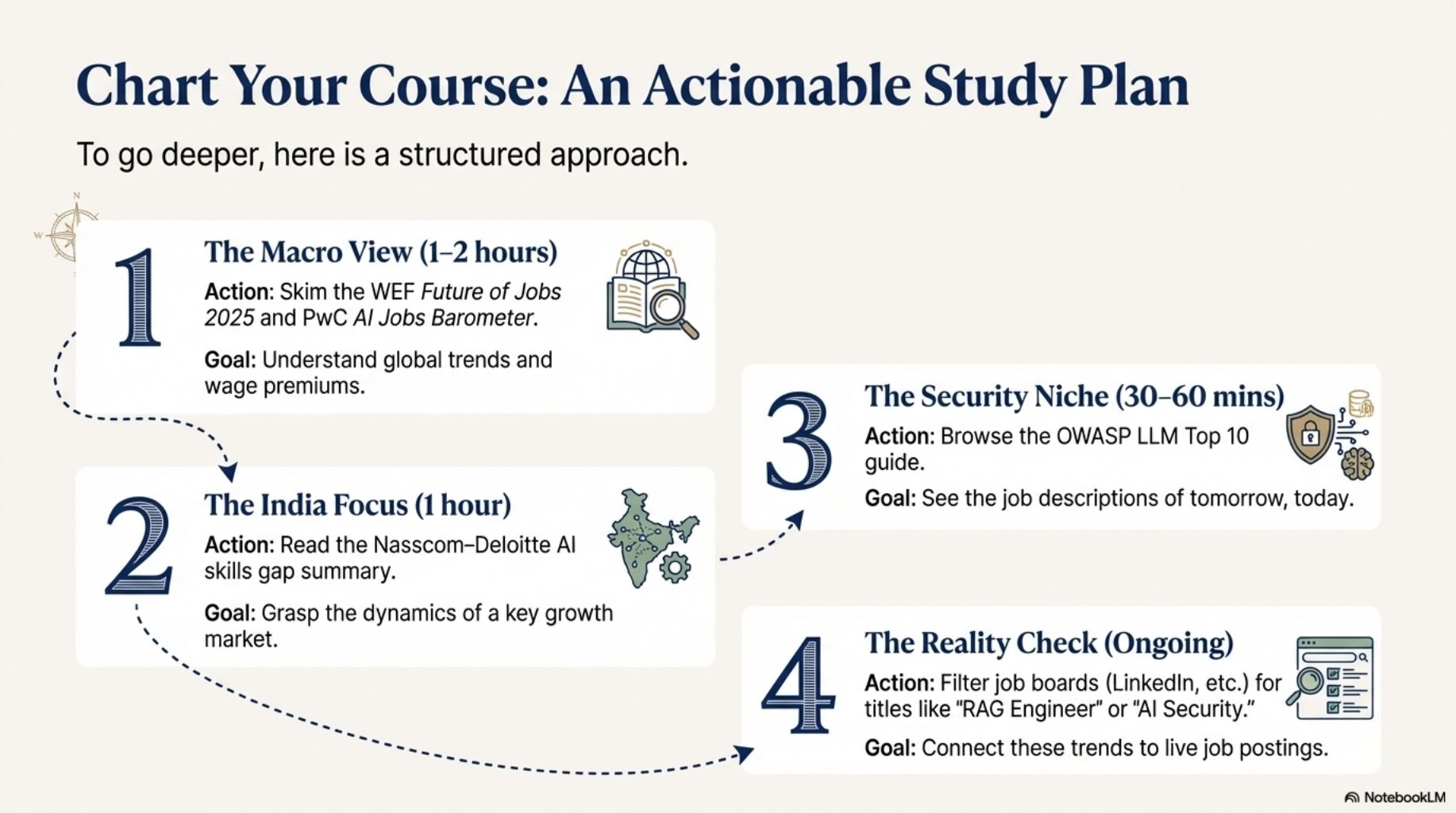
The most effective preparation strategy is sequential, not scattered. Start by understanding global trends and wage signals. Then study India-specific demand and skill gaps. Explore emerging areas like AI security to see future roles forming early. Finally, validate everything against live job listings—because hiring data is the most honest signal of where the market is going.
The Real Impact of AI on Work
AI isn’t eliminating human relevance—it’s compressing low-value tasks and expanding demand for people who can design, deploy, secure, and govern intelligent systems. Career resilience in the AI era comes from shifting focus away from “tasks AI can do” and toward building systems where AI becomes reliable, scalable, and valuable.